

Best Dry Polishing Pads for Granite: Expert Recommendations for Fabricators
|
Summary: Diamond concrete saw blades cut materials at higher speeds, and they last longer while producing cleaner cuts, and they maintain lower temperatures when compared to normal abrasive saw blades. Diamond concrete saw blades cut faster, last longer, and produce cleaner cuts than standard abrasive blades. They improve jobsite efficiency, reduce downtime, and provide more consistent cutting performance across commercial and residential concrete applications. |
Anyone who works with granite knows the polishing stage can make or break the job.
The slab can be cut to perfection. That edge profile can be great looking. The installation can go smoothly. To be honest, that's what the customer sees if you don't get the finish right.
And granite isn't exactly tolerant.
Its density makes it hard on tooling. You need the right process and polishing pads to remove scratches, blend edges, and create an even shine.
This additional work away from the shop makes it an even greater challenge.
There is a lot of finishing work during installation. Sink cutouts need cleanup. Edges need refining. The customer wants small blemishes fixed before he agrees to sign off on the project.
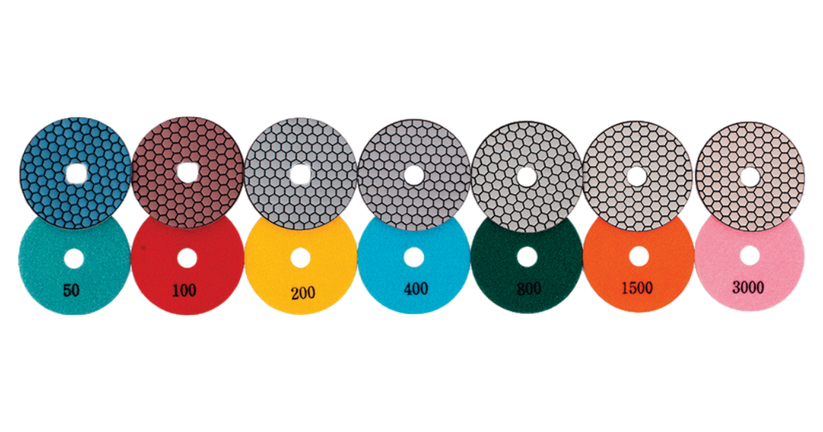
Dry polishing pads are where the contractors and installers have made the shift.
The reason is simple.
They enable crews to polish dry but deliver a perfect, professional finish. This translates into less need for setup, more adaptability, and quicker operation in areas where wet polishing simply isn't feasible.
The problem is that not every dry polishing pad works in the same way.
Some cut faster. Some last longer. Some handle heat better. And some can allow your crew to progress through polishing phases much quicker than others.
Selecting the ideal pad is more than obtaining a great shine.
It is about saving time, optimising workflow, and getting the finish your customer expects every single time.
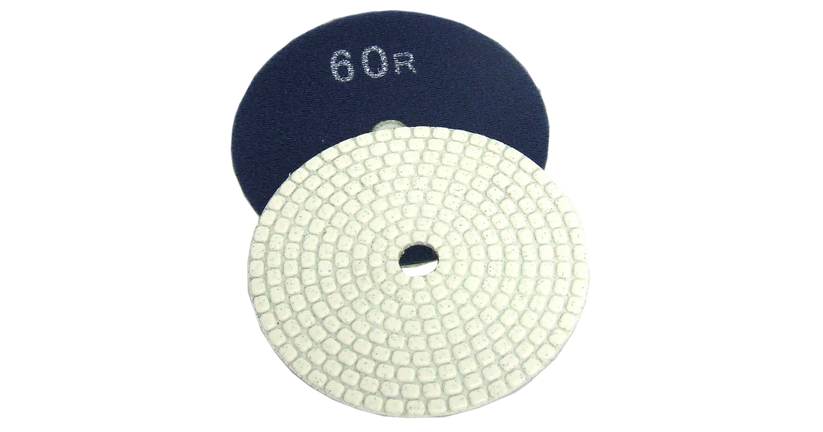
Shop Alpha Ceramica Dry Polishing Pad - 4 Inch now
Understanding Granite Polishing Requirements Before Choosing Pads
Every stone is treated differently while in the polishing stage.
Granite has its own quirks, and it takes a careful mix of abrasives, resin technology, and polishing technique to get the desired look.
Granite Is Extremely Hard
Granite is one of the hardest materials commonly fabricated in stone shops.
This durability is excellent when it comes to finished installations, but it means polishing pads require sufficient cutting power to hone the surface with precision.
Cheap pads can fail to consistently remove scratches. They run hot, grind down quickly, and make operators take more time to achieve a finish right.
Quality diamond abrasives: You will see a difference.
They cut, they last, and they allow you to achieve consistent results throughout the polishing process.
Polishing Happens in Stages
Professional polishing isn't a one-step process.
Each grit level serves a specific purpose.
Typically, fabricators move through:
-
50 grit for aggressive scratch removal
-
100 grit for refining coarse marks
-
200 grit for additional smoothing
-
400 grit for surface refinement
-
800 grit for developing clarity
-
1500 grit for enhanced shine
-
3000 grit and higher for final gloss
Every stage builds on the previous one.
Skip a grit level, and scratches from earlier stages may remain visible on the finished surface.
Dry Polishing Creates Heat
One challenge of dry polishing is heat generation.
Without water to cool the surface, friction increases during operation.
Excess heat can:
-
Reduce pad life
-
Affect polishing performance
-
Create inconsistent finishes
-
Increase operator fatigue
That's why quality dry polishing pads use heat-resistant resin systems designed specifically for dry applications.
Application Matters
Dry polishing pads are particularly useful when working on:
-
Countertop edges
-
Sink cutouts
-
Backsplash details
-
On-site touch-ups
-
Repair work
-
Tight corners and curved surfaces
These are areas where mobility and flexibility matter.
Instead of setting up water-fed polishing systems, fabricators can quickly complete detailed finishing work with a handheld polisher and the right pad set.
Tool Compatibility
Most dry polishing pads are designed for use with handheld polishers and variable-speed grinders.
Four-inch pads remain one of the most common sizes in fabrication shops because they give excellent control, while still moving material out efficiently.
Before you purchase, always double-check compatibility with your backing system and the recommended RPM range.
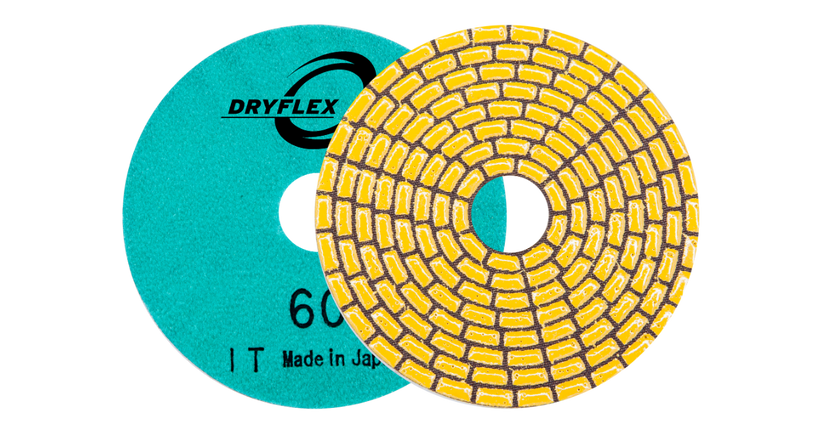
Shop Diamax Dryflex Dry Polishing System now
Why Dry Diamond Polishing Pads Remain the Go-To Choice
Dry diamond polishing pads are still one of the most practical finishing options for granite polishing pads fabrication.
The reason is straightforward.
They combine mobility, efficiency, and professional polishing performance in a single system.
Diamond abrasives handle the cutting and refining part, and the resin bond brings flexibility along with more control during the whole polishing run.
As operators climb through the grit sequence, the surface ends up smoother, clearer, and more reflective.
So you get that clean professional look, which also brings out the stone’s natural beauty.
For fabricators doing installation work or detailed edge polishing, dry pads offer a convenience level that wet systems usually can’t match, even when people try.
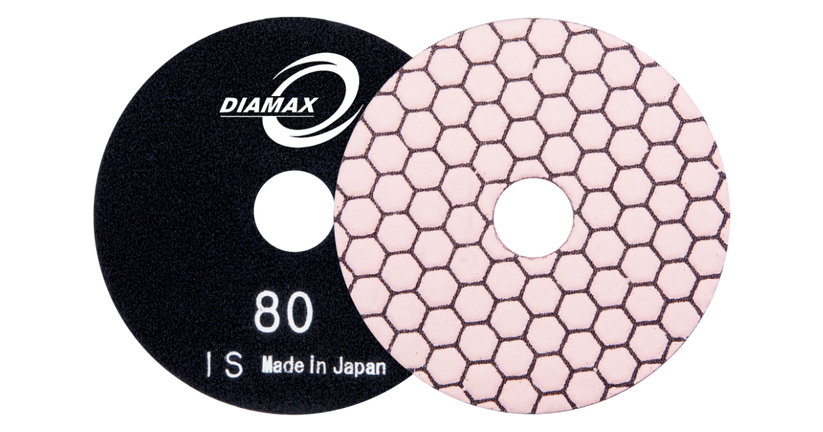
Get Diamax Diaflex Dry Polishing System now
Features That Separate the Best Dry Polishing Pads from the Rest
Not all polishing pads deliver the same results.
Here are the features experienced fabricators typically look for when selecting dry polishing pads.
High-Quality Diamond and Resin Construction
Everything starts with the materials.
Premium diamonds provide faster cutting and more consistent polishing throughout the life of the pad.
High-quality resin helps manage heat while maintaining flexibility during operation.
The combination leads to:
-
Better finish quality
-
Longer pad life
-
Faster polishing performance
-
Improved value over time
Complete Grit Availability
A quality polishing system should support every stage of the finishing process.
Fabricators commonly use grit progressions that include:
50 → 100 → 200 → 400 → 800 → 1500 → 3000 → 5000
Having access to the full range ensures consistent results across different projects and finish requirements.
Designed Specifically for Dry Use
What's great about purpose-built dry polishing pads is that they're engineered to handle the additional heat generated during dry operation.
This makes them ideal for:
-
Jobsite finishing
-
Installation adjustments
-
Edge polishing
-
Quick repairs
Pads designed specifically for dry applications typically outperform standard pads used outside their intended purpose.
Flexibility Around Edges and Curves
Granite fabrication involves more than flat surfaces.
Fabricators frequently polish:
-
Bullnose edges
-
Eased edges
-
Sink openings
-
Curved details
-
Decorative profiles
Flexible resin pads conform better to these shapes, improving finish consistency and operator control.
Faster Polishing Performance
Time matters in every fabrication shop.
High-performance dry polishing pads help crews complete polishing work more efficiently while maintaining finish quality.
That means:
-
Less labor time
-
Faster project completion
-
Improved workflow efficiency
For busy shops, those savings add up quickly.
Multi-Step and Reduced-Step Systems
Traditional polishing systems often use seven or more steps.
Modern polishing technology has introduced reduced-step systems that can achieve impressive results with fewer pad changes.
Both approaches have their place.
Multi-step systems provide maximum control and finish precision.
Reduced-step systems help improve speed and productivity on appropriate applications.
The best choice depends on your workflow, finish requirements, and production goals.
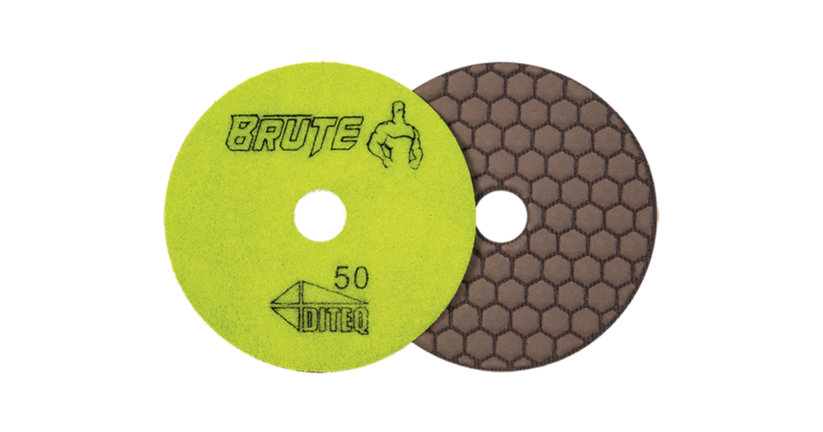
Buy Brute 4" Granite Dry Polishing Pads now
Expert Tips for Better Polishing Results
Even the best polishing pads perform better when paired with proper technique.
Follow the Grit Sequence
Never rush the process.
Each grit removes scratches created by the previous grit.
Skipping levels often creates more work later.
Control Heat
Dry polishing works best when operators avoid excessive pressure.
Use steady movement and shorter polishing passes.
Allow the pad to work naturally rather than forcing it into the surface.
Use Proper RPM Settings
Too much speed creates unnecessary heat.
Too little speed reduces efficiency.
Follow manufacturer recommendations and use variable-speed tools whenever possible.
Keep Pads Clean
Dust buildup affects cutting performance.
Clean pads regularly during operation to maintain consistent results.
Use Light Pressure
The diamonds should do the work.
Applying excessive force rarely improves performance and often shortens pad life.
Match the Pad to the Job
Some projects require maximum finish quality.
Others prioritize speed and productivity.
Selecting the appropriate polishing system helps achieve the right balance.
Best Practices for Fabrication Shops
Successful fabrication teams often follow a few simple habits.
Use dedicated pad sets for different stone types.
Test new polishing systems on sample material before full production.
Maintain consistent polishing patterns across the entire surface.
Replace worn pads before finish quality begins to decline.
These small practices help eliminate inconsistencies and improve overall shop efficiency.
Maintenance Tips for Longer Pad Life
A little maintenance goes a long way.
To maximize pad performance:
-
Clean pads after each use
-
Store them in a dry environment
-
Avoid excessive heat buildup
-
Rotate pad usage evenly
-
Inspect regularly for wear
Proper care helps extend pad life while maintaining consistent polishing performance from project to project.
Choosing the Right Dry Polishing Pad for Granite
The last bit of polish is where the craftsmanship starts to show.
Every edge, corner, and plain surface tells about the whole fabrication process behind it, if you look closely.
That’s why picking the correct dry polishing pads matters more than most people think.
The best polishing pads bring together top-tier diamond abrasives, a sturdy resin body, full grit availability, and dependable performance across a bunch of granite jobs.
So whether you’re doing meticulous edge work, sink cutouts, quick installation touch-ups, or full-on fabrication builds, the right polishing setup can help your crew move quicker while still getting that professional-grade finish.
If you’re after dry polishing pads for granite fabrication, Tait Sales & Consulting, LLC has solutions built to support smoother workflows, longer pad life, and consistent polishing results at each stage of the finishing process.
FAQ's
Yes, dry polishing pads can be good for granite. They’re often used during fabrication, especially for edge, sink cutouts, quick repairs, and on-site finishing.
A common progression people use goes something like 50, 100, 200, 400, 800, 1500, and then 3000 grit. If you’re chasing that super top gloss, sometimes you’ll go higher too, like an additional higher grit stage after 3000.
They can be effective. Reduced step systems can give results and help productivity, too. But the older multi-step setups still tend to give more control and a finer polish when the job is more demanding, or you care about refinement, like for certain finished surfaces.
Usually no. Not if you use them correctly, with the right technique, and you don’t skip the grit progression. When it’s done right, dry polishing pads polish granite safely, without wrecking the surface.
Dry polishing pads are nice for installation work, touch-ups, repairs, and basically anywhere water is awkward, or you can’t use it. Wet polishing pads are often better for bigger fabrication runs, because the water helps manage heat and dust, especially during long polishing sessions.
Robert Tait
Robert Tait is a senior sales and operations leader with over 30 years of experience in manufacturing and distribution. Based in Overland Park, Kansas, he is the President of Tait Sales & Consulting LLC (TSC), a family-owned and operated venture he founded in 2019. TSC was founded to provide diamond tooling, material handling, and all related consumables to the natural stone industry. The industries have now expanded to include, construction, glass, tile, masonry, hardscape and concrete industries.