

How Slab Racks Improve Material Organization and Workflow
|
Summary: Slab racks help a lot with the stone fabrication workflow. Really, they make things cleaner because the heavy slab inventory gets kept vertically. This gives better visibility, safer handling, quicker retrieval, and also more sensible space usage. In the end, they lower material damage, support forklift access, and help production stages run more smoothly. Plus, they keep the shop environment safer, with less clutter and more control. When slab storage is organized like that, fabrication shops can push efficiency higher, protect the stone better, and cut down those annoying workflow delays. |
Stone fabrication shops end up dealing with materials that are heavy, fragile, and honestly, kind of awkward once production is rolling.
Granite, quartz, marble, porcelain, and engineered stone slabs travel through a bunch of steps, like receiving, storage, cutting, polishing, finishing, and dispatch. If there’s no organized storage system in place, slabs start getting hard to track fast, and they also become much less reachable. Loose slabs that are leaning against a wall, or just placed right on the floor, tend to slow things down, create small but constant bottlenecks, and, at the same time, raise the odds of damage.
And yeah, this issue shows up even more once inventory keeps growing.
Fabricators need a system that keeps slabs organized, protected, visible, and accessible for handling equipment. That is where slab racks become part of the fabrication workflow.
A proper slab rack system helps fabrication shops organize inventory vertically while improving floor space usage, material protection, and handling efficiency throughout production.
This guide explains:
-
How slab racks function
-
Why do they improve workflow
-
How do they support safer handling
-
Where they fit into daily fabrication operations

Core Benefits of Slab Racks
A. Better Material Organization
One of the biggest advantages of slab racks is inventory organization.
Stone shops often carry multiple slab types, colors, thicknesses, and finishes at the same time. Without organized storage, operators waste time searching through material before work even begins.
Vertical slab storage makes it easier to sort and identify materials.
Why it matters:
-
Slabs remain visible at a glance
-
Materials can be grouped by type or project
-
Retrieval becomes faster during production
-
Inventory tracking becomes more manageable
Horizontal stacking creates another problem. Slabs placed directly on top of one another increase the risk of scratching and edge damage during movement.
Vertical storage reduces unnecessary slab-to-slab contact while making inventory easier to access.
The Slab Racks Collection at TSC includes rack systems designed specifically for stone fabrication environments where organization and accessibility directly affect workflow speed.
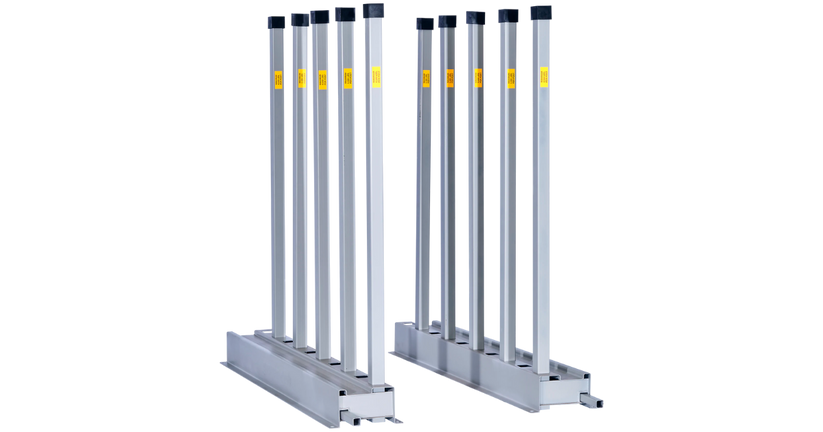
Shop Groves Bundle Rack and Aardwolf Galvanized Slab Rack.
B. Space Optimization
Floor space disappears quickly inside fabrication shops.
Large slabs consume significant space, especially when inventory levels increase. Slab racks help use vertical space more efficiently instead of spreading materials across open floor areas.
Why it matters:
-
More slabs fit within the same footprint
-
Fabrication areas stay less congested
-
Production movement becomes more efficient
This becomes especially important in busy shops handling multiple jobs simultaneously.
Organized racks also help maintain clear aisles for forklifts, carts, and slab-handling equipment moving between saw stations, CNC machines, polishing stations, and loading areas.
Without organized storage, slab movement slows down because operators must constantly reposition material to reach the correct piece.
C. Material Protection
Stone slabs are durable once installed, but fabrication environments expose them to edge impacts, scratches, and tipping hazards before installation.
Improper storage creates avoidable damage.
Slabs leaned loosely against walls or stacked unevenly on the floor are more likely to chip along edges, develop surface scratches, or shift unexpectedly during handling.
Slab racks reduce those risks by providing stable support points and organized separation between materials.
Why it matters:
-
fewer damaged slabs
-
lower material waste
-
reduced replacement costs
Many slab rack systems use heavy steel rails and support posts designed specifically for the weight and dimensions of stone slabs.
D. Improved Workflow Efficiency
Workflow problems often begin with material access.
If operators spend extra time locating slabs, clearing pathways, or repositioning inventory, production slows before cutting even starts.
Slab racks improve workflow by creating a more controlled material flow throughout the fabrication process.
Why it matters:
-
Slabs are easier to identify quickly
-
Less time is spent moving unnecessary material
-
Workstations receive slabs faster
-
Production becomes more predictable
Instead of searching through disorganized inventory, operators can move slabs directly from storage to fabrication stations with fewer interruptions.
That efficiency becomes more noticeable in high-volume fabrication shops where multiple projects move through production simultaneously.
Small delays repeated throughout the day eventually become major production losses.
Organized rack systems help reduce those interruptions.
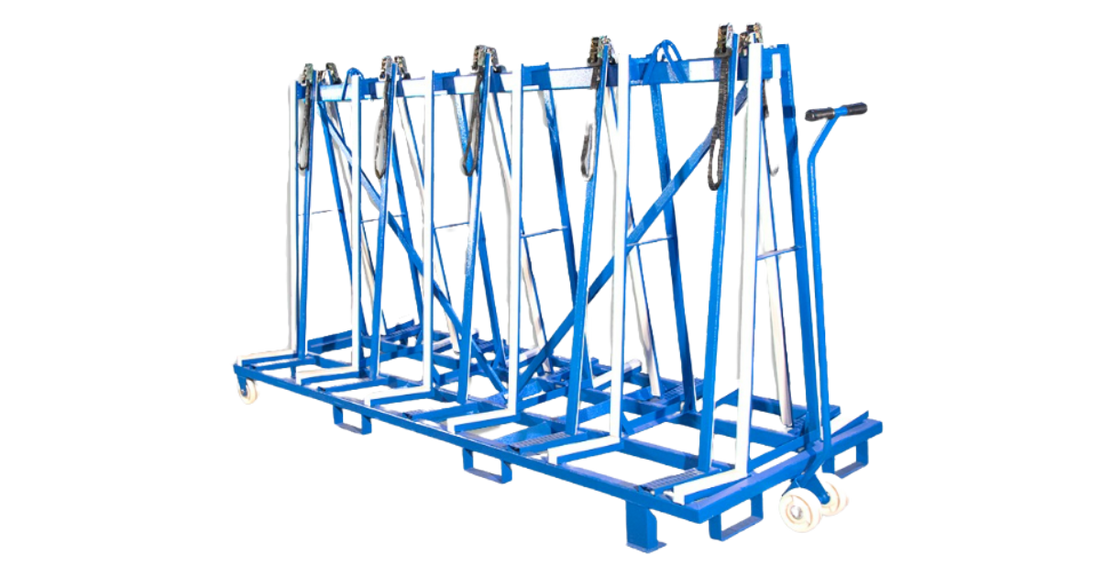
Shop Aardwolf Transport (10ft Long) Rack TF3050
E. Safer Work Environment
Stone slabs are extremely heavy.
Improperly stored slabs create serious safety risks for operators and installers moving through the shop.
Unsecured slabs can tip unexpectedly, shift during handling, or create crushing hazards during repositioning.
Slab racks help reduce those risks by keeping slabs upright, separated, and properly supported.
Why it matters:
-
safer movement through fabrication areas
-
reduced tipping hazards
-
more controlled forklift access
A safer shop layout also improves workflow because operators can move material more confidently without navigating unstable storage conditions.
Types of Slab Racks Used in Stone Shops
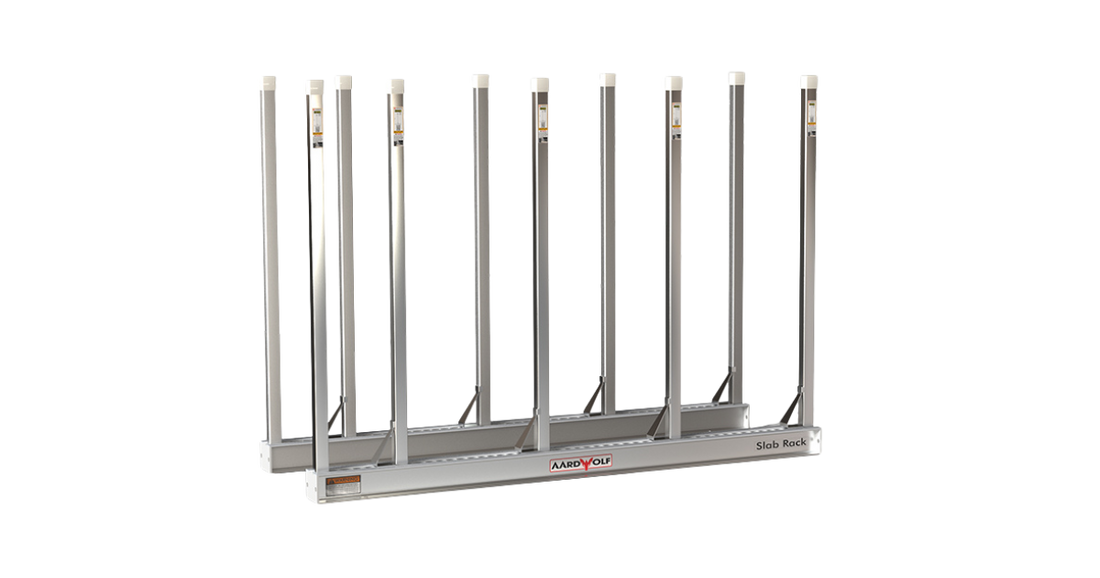
A. Standard Vertical Slab Racks
Standard vertical slab racks are commonly used for long-term storage of full slabs.
These systems typically use heavy steel rails and spaced support posts to keep slabs upright and organized while allowing easy forklift access.
They work well for:
-
granite slabs
-
quartz slabs
-
marble inventory
-
porcelain panels
B. Slab and Bundle Racks
Some fabrication shops store multiple slabs together in grouped bundles.
Slab and bundle racks are designed to support that type of storage arrangement while maintaining separation and stability.
These systems often include customizable rail and post configurations depending on inventory size and slab dimensions.
C. Display or Double-Sided Racks
Double-sided racks are often used in showroom environments where slab visibility matters.
Customers can view the slab face directly while materials remain organized and protected.
These racks also work well in fabrication shops where quick visual material identification improves workflow speed.
D. Bundle and Remnant Rack Options
Not every piece inside a fabrication shop is a full slab.
Remnants and leftover materials still require organized storage if they are going to remain usable.
Dedicated remnant rack systems help separate smaller pieces from the full inventory while keeping them accessible for future projects.
That helps shops reduce material waste while keeping a smaller inventory organized.
How Slab Racks Fit Into Fabrication Workflow
1. Receiving & Storage
Most fabrication workflows begin at material receiving.
New slabs are placed directly into rack systems instead of being stacked temporarily on the floor. That helps protect inventory immediately while simplifying inventory tracking.
2. Staging for Cutting
Once fabrication begins, slabs are pulled directly from storage and moved to saws or CNC systems.
Organized racks reduce unnecessary searching and repositioning during this stage, which helps improve production flow.
3. Polishing & Finishing
While finishing work, slabs often move repeatedly between stations.
Rack systems help keep materials accessible without forcing operators to stack slabs unsafely between production stages. This reduces unnecessary handling and lowers edge damage risk.
4. Packing & Dispatch
Completed slabs also need organized staging before delivery.
Rack systems allow shops to group slabs by project, customer, or installation schedule, reducing loading confusion and dispatch errors.
Conclusion: Slab Racks Are a Foundation of Organized Workflow
Slab racks are more than simple storage systems.
They help fabrication shops:
-
organize heavy material inventory
-
protect slab surfaces and edges
-
improve space usage
-
maintain safer working conditions
-
speed up material movement across production
Without organized slab storage, fabrication workflows become slower, more congested, and harder to manage as inventory grows.
A properly planned slab rack system improves both workflow efficiency and long-term material protection.
Explore the Slab Racks Collection at Tait Sales & Consulting LLC to build a more organized and efficient stone fabrication workflow.
FAQ's
Vertical storage is commonly preferred because it improves organization, accessibility, and space usage while reducing slab-to-slab surface contact.
Yes. Slab racks are commonly used for granite, marble, quartz, porcelain, and engineered stone materials.
Yes. Most slab rack systems are designed to allow forklift access for loading, unloading, and slab movement.
They reduce tipping hazards by keeping slabs upright, separated, and supported in stable storage positions.
Support posts, rails, bundle rack components, and protective padding are commonly used to improve slab organization and material protection.
Robert Tait
Robert Tait is a senior sales and operations leader with over 30 years of experience in manufacturing and distribution. Based in Overland Park, Kansas, he is the President of Tait Sales & Consulting LLC (TSC), a family-owned and operated venture he founded in 2019. TSC was founded to provide diamond tooling, material handling, and all related consumables to the natural stone industry. The industries have now expanded to include, construction, glass, tile, masonry, hardscape and concrete industries.