

The History of Diamond Manufacturing: Decoding the Original Diamond Sales Kit
|
Summary: The article traces the evolution of synthetic diamond manufacturing and its impact on grinding and shaping tools. It explains how engineered diamonds, specialized coatings, and bond systems improved performance, durability, and heat management. The original diamond sales kits educated fabricators, showcasing innovations that continue to enhance modern stone fabrication and industrial grinding applications. |
When fabricators think about Grinding and Shaping Tools, they usually focus on the finished product—a grinding cup wheel, polishing pad, profiling wheel, or grinding blade. What often goes unnoticed is the engineered diamond inside those tools. Every synthetic diamond crystal has been developed for a specific purpose, whether that's wet grinding, dry shaping, precision cutting, or extended tool life.
The evolution of man-made diamonds didn't happen overnight. It was driven by decades of research aimed at improving performance, managing heat, and making grinding and cutting operations more reliable. One of the best ways to understand this history is through the original diamond sales kits that manufacturers once carried to demonstrate different synthetic diamond materials and explain why each one existed.
These kits weren't simply collections of samples. They were educational tools that helped customers understand how diamond manufacturing influenced tool performance. Today, many of those same engineering principles continue to shape the Grinding and Shaping Tools available through Tait Sales & Consulting.
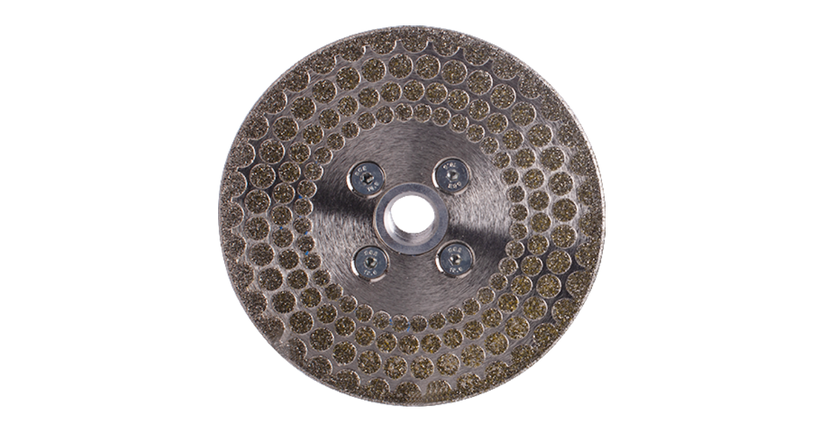
Let's take a closer look at how synthetic diamond technology evolved and why it still matters in modern stone fabrication.
Why Synthetic Diamonds Changed Grinding Technology
Natural diamonds offered exceptional hardness, but they couldn't provide the consistency required for industrial manufacturing. Every stone varied in size, shape, and quality.
Synthetic diamonds changed that.
Manufacturers could now produce diamond crystals with controlled sizes, predictable strength, and specialized coatings. Instead of relying on naturally occurring materials, tool manufacturers could design abrasives specifically for grinding, shaping, cutting, or polishing applications.
For fabrication shops, this meant:
-
More consistent grinding performance
-
Longer-lasting tools
-
Better finish quality
-
Improved production efficiency
-
Lower tooling costs over time
Rather than treating every grinding application the same, manufacturers began engineering diamonds for very specific working conditions.
The Original Sales Kit: A Hands-On Lesson in Diamond Engineering
Long before digital presentations and online product catalogs, sales representatives carried demonstration kits filled with synthetic diamond samples.
Each compartment represented a different type of manufactured diamond, allowing customers to compare crystal shapes, coatings, and intended applications.
Instead of simply telling customers which product worked best, these kits showed exactly how different manufacturing methods produced different performance characteristics.
It became much easier to explain why one diamond excelled during wet grinding while another performed better under dry operating conditions.
That educational approach helped fabricators choose the right material rather than relying on trial and error.
RVG Diamonds: Built for Grinding Performance
One of the first materials introduced in these demonstration kits was RVG, short for Resinoid Vitrified Grinding.
At first glance, the crystals resembled small pieces of black coal. Their appearance wasn't particularly impressive, but their performance told a different story.
RVG diamonds were developed specifically for grinding wheels using ceramic or resinoid bond systems.
Their purpose was straightforward:
-
Deliver consistent grinding action
-
Maintain cutting efficiency
-
Work effectively within bonded grinding wheels
As grinding applications became more demanding, manufacturers recognized that heat management would become just as important as diamond hardness.
That realization led to two specialized RVG variations.
Wet Grinding Required a Different Solution
Grinding naturally generates heat.
Without proper cooling, excessive temperatures can shorten diamond life and reduce tool performance.
To solve this challenge, manufacturers developed RVGW, with the "W" representing wet grinding.
These diamonds received a nickel coating before being incorporated into grinding tools.
The nickel coating served several important purposes.
|
Feature |
Benefit |
|
Nickel coating |
Helps retain diamond within the bond |
|
Water-assisted grinding |
Reduces operating temperature |
|
Lower heat buildup |
Extends diamond life |
|
Improved retention |
Consistent grinding performance |
For fabrication shops working with water-fed grinding equipment, this combination helped maximize both tool life and grinding efficiency.
Dry Grinding Needed a Different Approach
Not every grinding application allows continuous water cooling.
Field installations, touch-up work, and certain fabrication processes often require dry grinding.
Rather than using the same diamond, manufacturers developed RVGD.
Here, the diamonds were coated with copper instead of nickel.
Copper's excellent heat conductivity helped transfer heat away from the diamond during operation.
The result was a diamond better suited for dry grinding applications where water wasn't available.
Instead of trying to force one material into every situation, diamond manufacturers engineered different solutions for different environments.
That philosophy remains central to today's Grinding and Shaping Tools.
Metal Bond Diamonds Expanded Manufacturing Possibilities
As fabrication methods evolved, grinding wasn't the only operation requiring specialized abrasives.
Manufacturers introduced MBG, or Metal Bond Grinding diamonds.
These materials were designed primarily for:
-
Glass
-
Ceramic tile
-
Light sawing
-
General grinding
Rather than focusing on extremely hard materials like granite or reinforced concrete, MBG filled an important role in lighter-duty applications.
Its development demonstrated that abrasive technology wasn't simply becoming stronger—it was becoming more specialized.
Different industries required different diamond characteristics, bonding systems, and engineering solutions.
From MBG to MBS: Refining Diamond Technology
Innovation didn't stop with MBG.
Manufacturers continued improving synthetic diamond materials to better support sawing applications.
This led to MBS, or Metal Bond Saw diamonds.
While MBG emphasized grinding, MBS shifted its focus toward cutting performance. Later, another advancement appeared.
Known as MBS 70, this generation reflected continued improvements made during the early 1970s.
Although each generation looked similar at first glance, refinements in manufacturing allowed better performance, greater consistency, and improved reliability.
These developments illustrate an important point. Diamond manufacturing has always been about continuous improvement rather than dramatic overnight changes. Small engineering refinements often produce meaningful gains inside fabrication shops.
Even Manufacturing By-Products Found Valuable Uses
Synthetic diamond production created another interesting material known simply as fines.
These tiny micron-sized diamond particles were by-products of the manufacturing process. Instead of discarding them, manufacturers discovered new ways to use them. Some remained uncoated for applications requiring fine diamond particles. Others received protective coatings similar to larger grinding diamonds.
These coatings helped protect the tiny crystals from excessive heat while preserving their abrasive properties.
This approach improved manufacturing efficiency by finding value in material that might otherwise have gone unused. It's another example of how diamond engineering continued evolving through practical innovation.
Borazon Offered an Alternative Abrasive
The demonstration kits didn't focus exclusively on diamonds.
They also introduced customers to Borazon, a trade name for synthetic boron nitride.
Although Borazon isn't diamond, it offers impressive hardness and toughness for industrial abrasive applications. Some versions were also coated to improve performance under demanding operating conditions. Rather than replacing diamond, Borazon expanded the range of available abrasive materials.
By understanding where each material performed best, fabricators could select tools better suited to their specific applications. Choosing the right abrasive has always been just as important as choosing the right machine.
What This History Means for Today's Fabrication Shops
Modern fabrication equipment has changed dramatically, but the engineering principles behind diamond abrasives remain remarkably consistent.
Today's Grinding and Shaping Tools continue to rely on decades of research into:
-
Heat management
-
Diamond retention
-
Bond compatibility
-
Abrasive consistency
-
Material-specific performance
Whether you're grinding granite countertops, shaping engineered stone, profiling marble edges, or preparing concrete surfaces, the performance of your tool begins with the engineered diamond inside it.
Understanding that history helps explain why different grinding tools exist for different applications. There's rarely one universal solution. Instead, successful fabrication depends on matching the right abrasive technology to the job.
Finding the Right Grinding and Shaping Tools
At Tait Sales & Consulting, selecting Grinding and Shaping Tools isn't simply about choosing the most aggressive or most expensive option.
It's about matching the right tool to:
-
Material type
-
Grinding method
-
Wet or dry operation
-
Desired finish
-
Production goals
With decades of innovation behind today's synthetic diamond technology, fabricators have access to tools engineered for specific working conditions rather than one-size-fits-all performance.
That translates into better productivity, improved finish quality, and longer-lasting equipment throughout the fabrication process.
Conclusion: Engineering That Still Shapes Modern Fabrication
The original diamond sales kit represented much more than a collection of sample materials at Tait Sales & Consulting, LLC. It documented the steady evolution of synthetic diamond manufacturing and showed how thoughtful engineering could solve real fabrication challenges.
From nickel-coated diamonds for wet grinding to copper-coated options for dry applications, from metal bond abrasives to micron-sized diamond fines, every development reflected a deeper understanding of how grinding tools perform under different conditions.
Those same principles continue to influence today's Grinding and Shaping Tools. As fabrication shops demand greater precision, efficiency, and reliability, the engineered diamond inside every tool remains one of the most important factors in achieving consistent results. Choosing the right tool isn't just about the equipment you hold; it's about the technology built into every diamond crystal.
For a closer look at the original diamond sales kit and the synthetic diamond samples discussed in this article, watch the original demonstration here:
FAQ's
Synthetic diamonds offer consistent size, strength, and quality, making them more reliable for industrial grinding and cutting tools.
It demonstrated different synthetic diamond types and helped customers understand how each material affected tool performance.
RVGW features a nickel coating for wet grinding, while RVGD uses a copper coating to improve heat dissipation during dry grinding.
MBG diamonds are designed for grinding applications such as glass and ceramics, while MBS diamonds are optimized for cutting and sawing.
Advanced diamond technology improves tool life, heat management, grinding efficiency, finish quality, and overall productivity by matching the right abrasive to specific fabrication tasks.
Robert Tait
Robert Tait is a senior sales and operations leader with over 30 years of experience in manufacturing and distribution. Based in Overland Park, Kansas, he is the President of Tait Sales & Consulting LLC (TSC), a family-owned and operated venture he founded in 2019. TSC was founded to provide diamond tooling, material handling, and all related consumables to the natural stone industry. The industries have now expanded to include, construction, glass, tile, masonry, hardscape and concrete industries.