

How Do Epoxy Products Improve Strength and Finish in Stone Projects?
|
Summary: Epoxy products improve both the strength and appearance of stone projects by reinforcing cracks, stabilizing weak areas, strengthening seams, and enhancing polish quality. Professional-grade epoxies provide durable bonding, moisture resistance, and seamless finishes across granite, marble, quartz, and porcelain applications, helping fabricators achieve cleaner installations, longer-lasting repairs, and higher-quality results. |
Stone fabrication looks clean and polished at the end, but behind every finished countertop, wall panel, or architectural install is a lot of structural problem-solving.
Fabricators deal with cracked slabs, weak seams, fissures, uneven backing surfaces, and heavy materials that need reinforcement before they ever reach installation. Granite, marble, quartz, porcelain, limestone, and engineered stone all come with natural imperfections that can affect both durability and finish quality.
Now here’s the thing — traditional fillers and standard adhesives only solve part of the problem.
Modern epoxy products do much more than simply “stick” materials together. They reinforce weak areas, stabilize cracks, improve polish quality, strengthen seams, and help fabricators create cleaner, more seamless finished work.
That’s why epoxy has become one of the most important materials in modern stone fabrication.
At Tait Sales & Consulting, fabricators can find professional-grade epoxy products designed specifically for countertop fabrication, crack repair, laminations, structural bonding, and surface finishing.
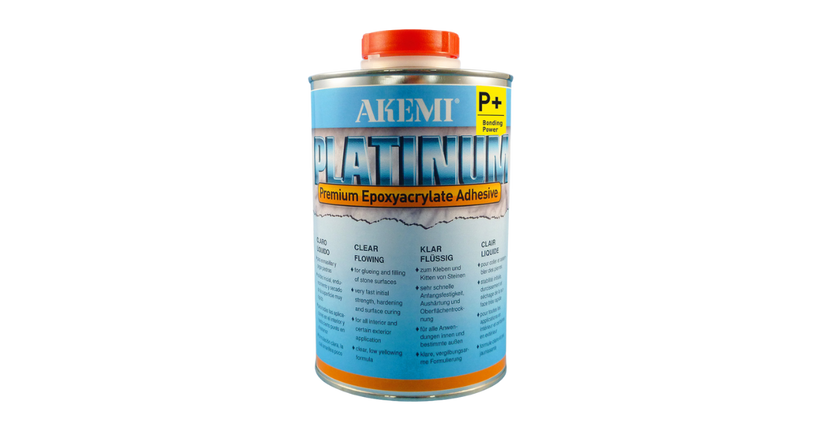
This guide breaks down:
-
How epoxy improves structural strength
-
How does it enhance the final finish quality
-
Which epoxy types work best for specific fabrication tasks
-
What products are commonly used in professional stone shops
What Epoxy Products Are & How They Work in Stone Applications
Epoxy products are two-component resin systems made up of:
-
Resin (Part A)
-
Hardener (Part B)
Once mixed correctly, the material chemically cures into a high-strength adhesive system with:
-
Excellent bond strength
-
Low shrinkage
-
Strong adhesion to stone surfaces
-
Moisture and weather resistance
-
Long-term durability
What makes epoxy different from standard adhesives is how aggressively it bonds to stone surfaces.
Instead of simply sitting on top of the material, epoxy penetrates microscopic pores and surface irregularities inside the stone itself. That creates both a chemical and mechanical bond capable of handling stress, weight, vibration, moisture, and polishing operations.
That’s exactly why epoxy products are heavily used in modern fabrication shops.
Structural Strength Improvements with Epoxy
A. Bonding Stone Pieces Together
One of the most important jobs epoxy handles is seam bonding and stone lamination.
Countertop seams, laminated waterfall edges, edge buildups, and large slab installations all depend on strong adhesive performance. Weak bonding can eventually lead to separation, cracking, or visible seam failure.
That’s where products like Bonstone Touchstone Clear Gel Knife Grade Epoxy stand out.
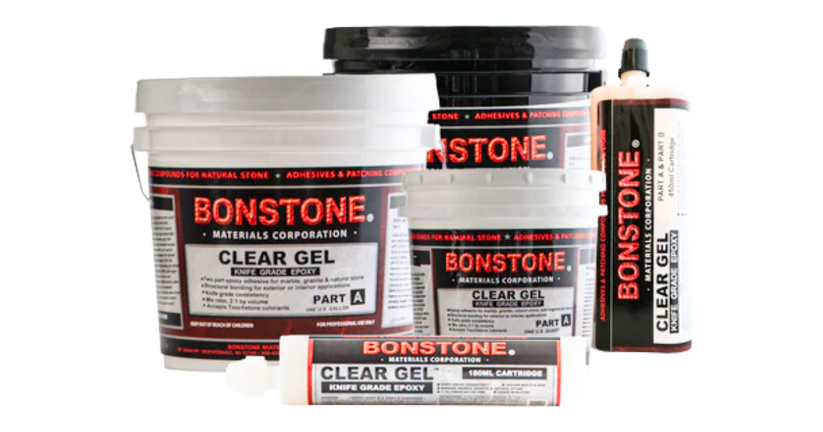
Bonstone and Touchstone Clear Gel epoxy is a two-part, transparent, knife-grade epoxy with a smooth, creamy consistency similar to Vaseline. That texture matters because it allows fabricators to create thin bond lines without excessive adhesive squeeze-out during clamping.
The epoxy delivers high bond strength while remaining polishable after cure. It can also be tinted using liquid tints for accurate color matching.
B. Filling Voids, Cracks & Imperfections
Natural stone almost always contains imperfections.
Some slabs contain visible pits and fissures. Others have microscopic cracks that may not appear until cutting or polishing begins.
Without reinforcement, these weak spots can eventually spread and compromise the slab.
That’s where low-viscosity epoxy products become essential.
Akemi Akepox 1005 is specifically designed for deep penetration into fine cracks and pores.
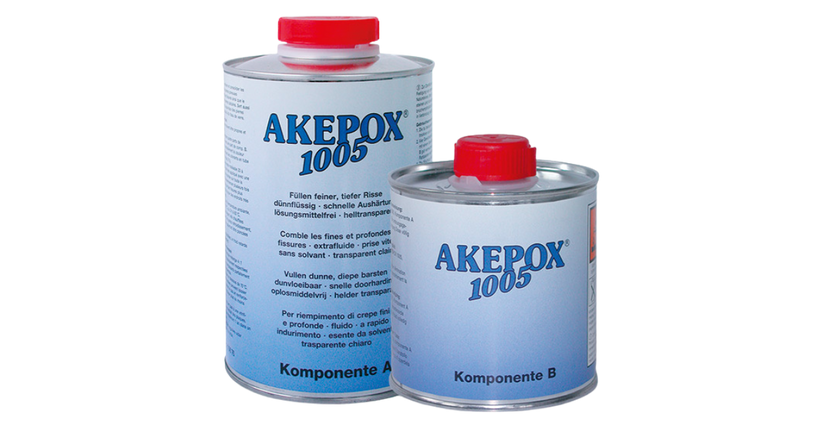
This two-component epoxy has an extremely low viscosity — almost water-like — allowing it to flow deep into microscopic imperfections before curing.
The product remains highly polishable after curing. That means repaired sections can still achieve the same gloss and finish quality as the surrounding stone surface.
For visible bonding joints and restoration work, Akemi Akepox 5000 Flowing provides another strong solution.
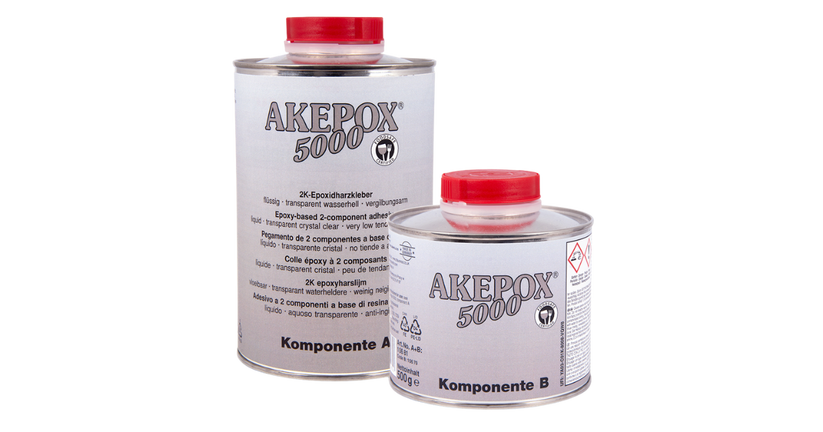
This low-viscosity epoxy offers:
-
Excellent polishability
-
Strong UV stability
-
Weather resistance
-
Good adhesion on humid stone
-
Transparent finish
-
Long working time
C. Use in Challenging Conditions
Not every fabrication environment is climate-controlled.
Outdoor installs, cold-weather repairs, and damp stone conditions can create major bonding problems for standard adhesives.
That’s why certain epoxy formulations are designed specifically for difficult conditions.
Bonstone Fast Set Extreme Cold Weather Epoxy is built for fast curing in cold temperatures.
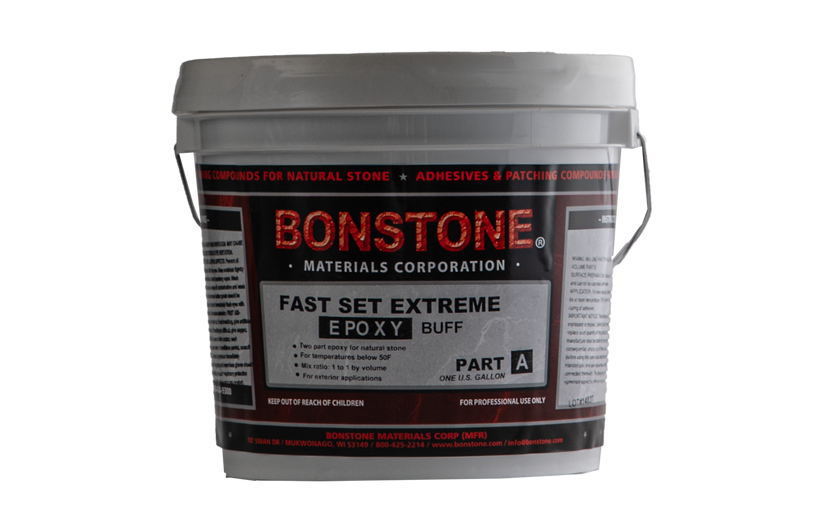
This knife-grade epoxy can:
-
Cure below freezing temperatures
-
Bond to slightly damp stone
-
Handle structural repairs
-
Anchor bolts and dowels
-
Repair cracks
-
Support assembly-line fabrication
For even faster turnaround cycles, Bonstone Fast Set Cold Weather Epoxy delivers a rapid 15-minute set time.
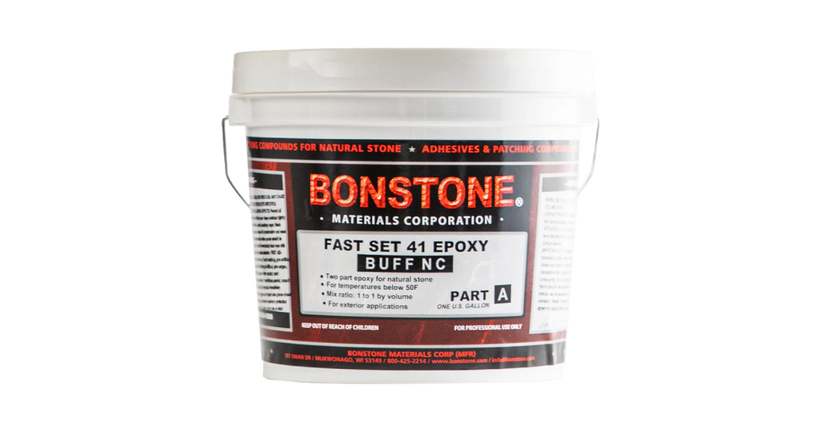
That speed matters in fabrication shops trying to reduce downtime between production stages.
Why Epoxy Improves Finished Appearance
A. Seam & Repair Aesthetics
Strength matters, but appearance matters just as much.
Customers notice seams immediately. Poor repairs, uneven gloss, and visible patching can completely affect the final presentation of a stone project.
That’s one reason epoxy products outperform many traditional fillers.
Epoxy can be:
-
Transparent
-
Tintable
-
Polishable
-
Color matched
-
Blended into stone surfaces
Products like Bonstone Touchstone Clear Gel Knife Grade Epoxy are especially valuable here because they combine structural strength with finish quality.
B. Polishing After Cure
Once fully cured, many epoxy products can be:
-
Ground down
-
Honed
-
Polished
-
Blended into the surrounding stone
That’s critical in high-end countertop fabrication where visible repairs simply aren’t acceptable.
A properly polished epoxy repair can become nearly invisible when color matching and finishing are done correctly.
C. Gap Filling & Leveling
Some fabrication problems begin underneath the slab.
Uneven substrates can create stress points that affect both appearance and long-term durability.
Touchstone T-2000 Epoxy Tile Adhesive helps solve that issue by creating a thick epoxy support bed that allows leveling and adjustment during installation.
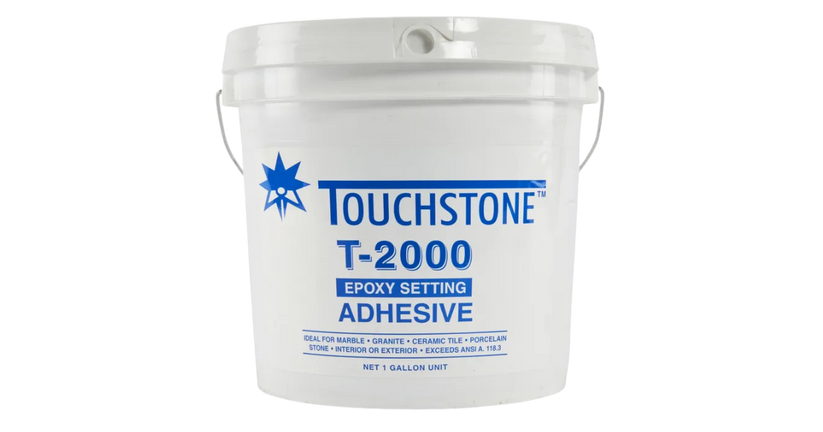
What’s great about the T-2000 is that it can be troweled smoothly while still maintaining structural support.
When to Use Specific Types of Epoxy in Stone Projects
A. Seam Bonding & Laminations
Use knife-grade or gel epoxies when working with:
-
Countertop seams
-
Laminated edges
-
Waterfall panels
-
Rodding applications
-
Vertical bonding
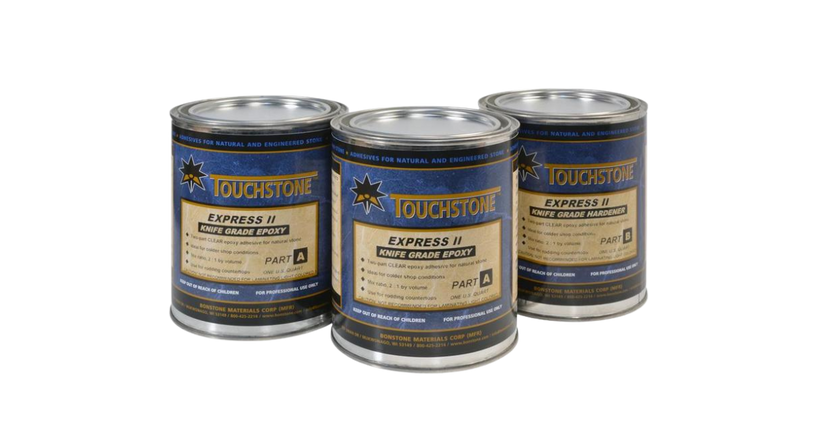
Alongside Touchstone Clear Gel, Touchstone Express II Knife Grade Epoxy is another strong option for fabrication shops that need faster curing speeds.
Its gel consistency helps maintain tight laminations while reducing cure time significantly.
B. Structural & Outdoor Work
For structural stone applications and exterior conditions, fabricators often need stronger, weather-resistant systems.
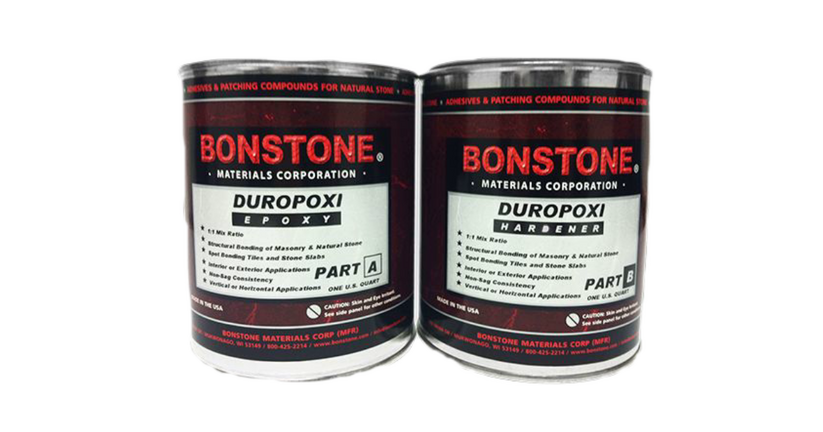
Bonstone Duropoxi is a general-purpose exterior-grade structural epoxy designed for:
-
Stone hardscapes
-
Pool coping
-
Masonry bonding
-
Monument construction
-
Veneer spot bonding
-
Paver installations
It delivers exceptional durability while remaining affordable for large-scale projects.
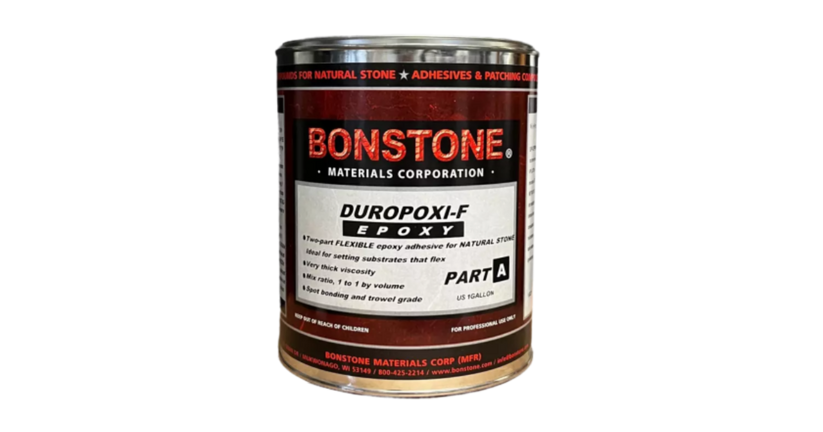
For installations requiring movement accommodation, Bonstone Duropoxi F adds flexibility after cure.
Unlike rigid epoxies, this formulation retains some flexibility, helping reduce stress failures caused by expansion, vibration, or substrate movement.
C. Crack Filling & Surface Repair
Before polishing begins, fabricators often need to stabilize cracks, pores, and weak areas inside the stone. That’s where low-viscosity penetrating epoxies become essential.
These epoxies flow deep into fine fissures and surface imperfections, helping strengthen the slab internally while improving final finish quality.
-
Akemi Akepox 1005 is a highly liquid, two-component epoxy designed for deep crack penetration and stone strengthening.
-
Akemi Akepox 5000 Flowing is another low-viscosity epoxy used for visible bonding joints, restoration work, and crack repairs.
Best Practices for Using Epoxy in Stone Fabrication
Surface Preparation
Proper preparation directly affects bond strength.
Before applying epoxy:
-
Remove dust completely
-
Clean oils and contaminants
-
Dry the surface thoroughly
-
Ensure stable substrate conditions
Even premium epoxy products can fail on contaminated surfaces.
Correct Mixing & Application
Always follow the manufacturer's mixing ratios exactly.
Incorrect ratios can affect:
-
Cure speed
-
Bond strength
-
Finish quality
-
Color consistency
Fabricators should also work efficiently before curing begins and avoid trapping air bubbles during application.
Post-Cure Finishing
Once cured:
-
Allow full hardening before polishing
-
Use diamond tooling for blending
-
Tint epoxy when necessary for color matching
-
Polish evenly across repair zones
Rushing finishing stages can affect both durability and appearance.
Conclusion: Why Epoxy Enhances Both Strength & Finish
Modern stone fabrication depends on more than cutting and polishing slabs. Shops today need materials that reinforce weak areas, strengthen seams, improve finish quality, and reduce failure risks during installation.
That’s exactly why epoxy products have become essential across the stone industry.
From filling microscopic cracks to bonding massive stone panels, epoxy systems improve both structural performance and visual finish quality when used correctly.
At Tait Sales & Consulting LLC, fabricators can find professional-grade epoxy solutions for seam bonding, crack repair, laminations, structural installations, and polishing applications.
If your shop is looking to improve fabrication quality, reduce slab failures, and create cleaner finished work, the right epoxy system can make a major difference in both workflow and final results.
FAQ's
Yes. Most professional epoxy products work on granite, marble, quartz, limestone, terrazzo, engineered stone, and concrete-based materials.
It depends on the product. Some fast-set epoxies cure within 30 minutes, while deeper penetrating systems may require up to 24 hours before grinding and polishing.
High-quality UV-stable epoxy systems are specifically designed to minimize discoloration and maintain their appearance over time.
Knife-grade epoxy is thicker and intended for seams, laminations, and vertical applications. Flowing epoxy is thinner and designed to penetrate cracks and stabilize stone surfaces.
Yes. Many epoxy products can be tinted with liquid pigments to create a closer visual match and blend more naturally with surrounding stone surfaces.
Robert Tait
Robert Tait is a senior sales and operations leader with over 30 years of experience in manufacturing and distribution. Based in Overland Park, Kansas, he is the President of Tait Sales & Consulting LLC (TSC), a family-owned and operated venture he founded in 2019. TSC was founded to provide diamond tooling, material handling, and all related consumables to the natural stone industry. The industries have now expanded to include, construction, glass, tile, masonry, hardscape and concrete industries.